Ruins Your Water Heater
Water heaters work harder when hard water is allowed to pass through them day after day. Minerals in the water settle on heating surfaces and the bottom of the tank, creating a layer of scale that interferes with normal operation.
That extra stress can lead to slower heating, wasted energy, noisy operation, and a shorter system lifespan. For many homeowners, the hidden cost of hard water shows up first in appliance repair and replacement.
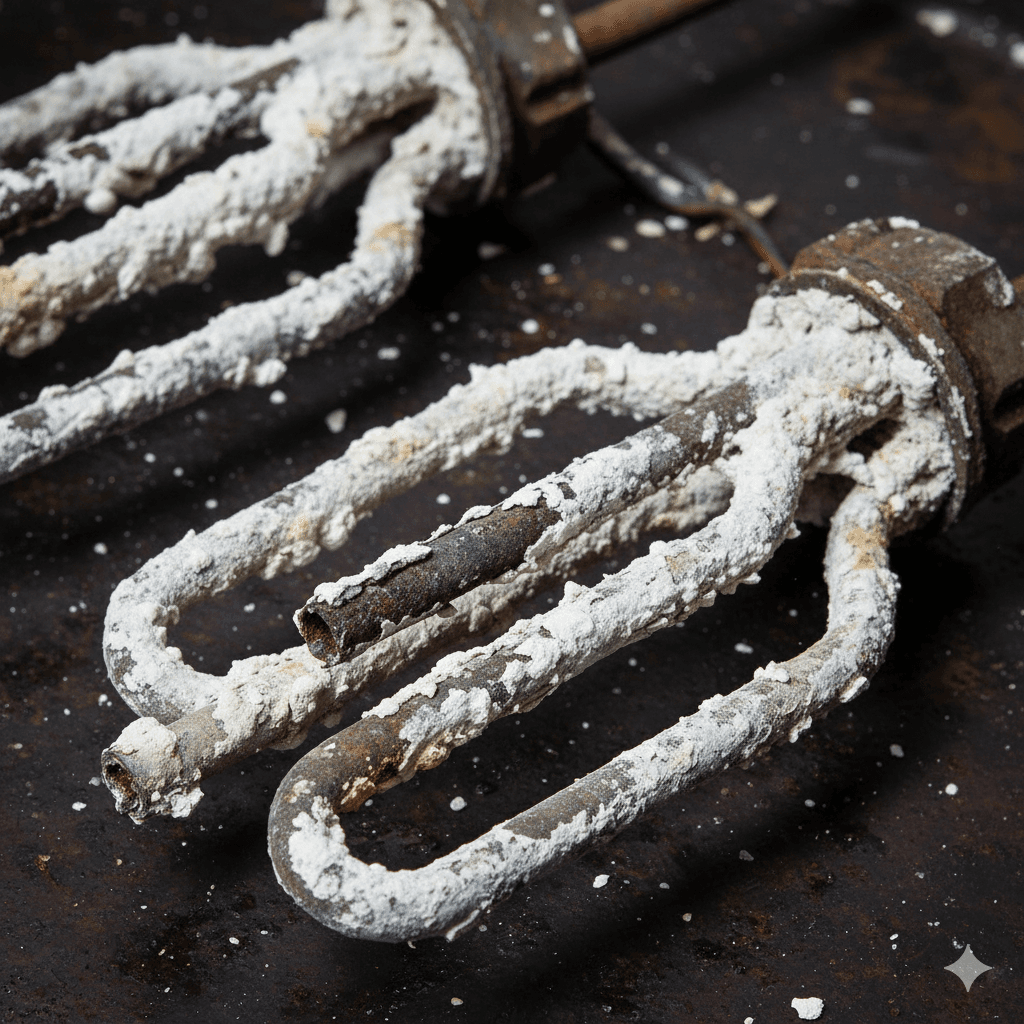
How mineral scale forms inside a water heater
When hard water is heated, dissolved minerals are more likely to separate out and settle on internal components. In tank heaters, buildup often collects at the bottom. In units with heating elements, scale can coat those surfaces directly.
As that layer grows thicker, heat transfer becomes less efficient. The system has to work harder and run longer to achieve the same result.
Why hard water shortens water heater life
Scale buildup forces the unit to operate under more strain. Heating elements may overwork, sediment can trap heat where it should not, and internal wear can accelerate long before the heater would normally fail.
That often shows up as higher utility bills, inconsistent hot water, rumbling noises, or premature replacement of parts that should have lasted longer.
How water treatment helps protect hot water equipment
Reducing hardness before water enters the heater helps limit the mineral scale that causes these issues. With less buildup, the system can heat more efficiently and maintain better long-term performance.
For homeowners who want to protect a major household investment, addressing hard water is one of the most practical ways to reduce avoidable wear on a water heater.