Spotted Dishes
If your dishes come out of the dishwasher with white spots or your drinking glasses look cloudy, hard water is a likely cause. Even when detergent and rinse aid are doing their job, mineral-heavy water can leave residue behind after each cycle.
That residue does more than affect appearance. It can make dishes feel less clean, reduce shine, and create frustration when you have to rewash items that should have been done the first time.
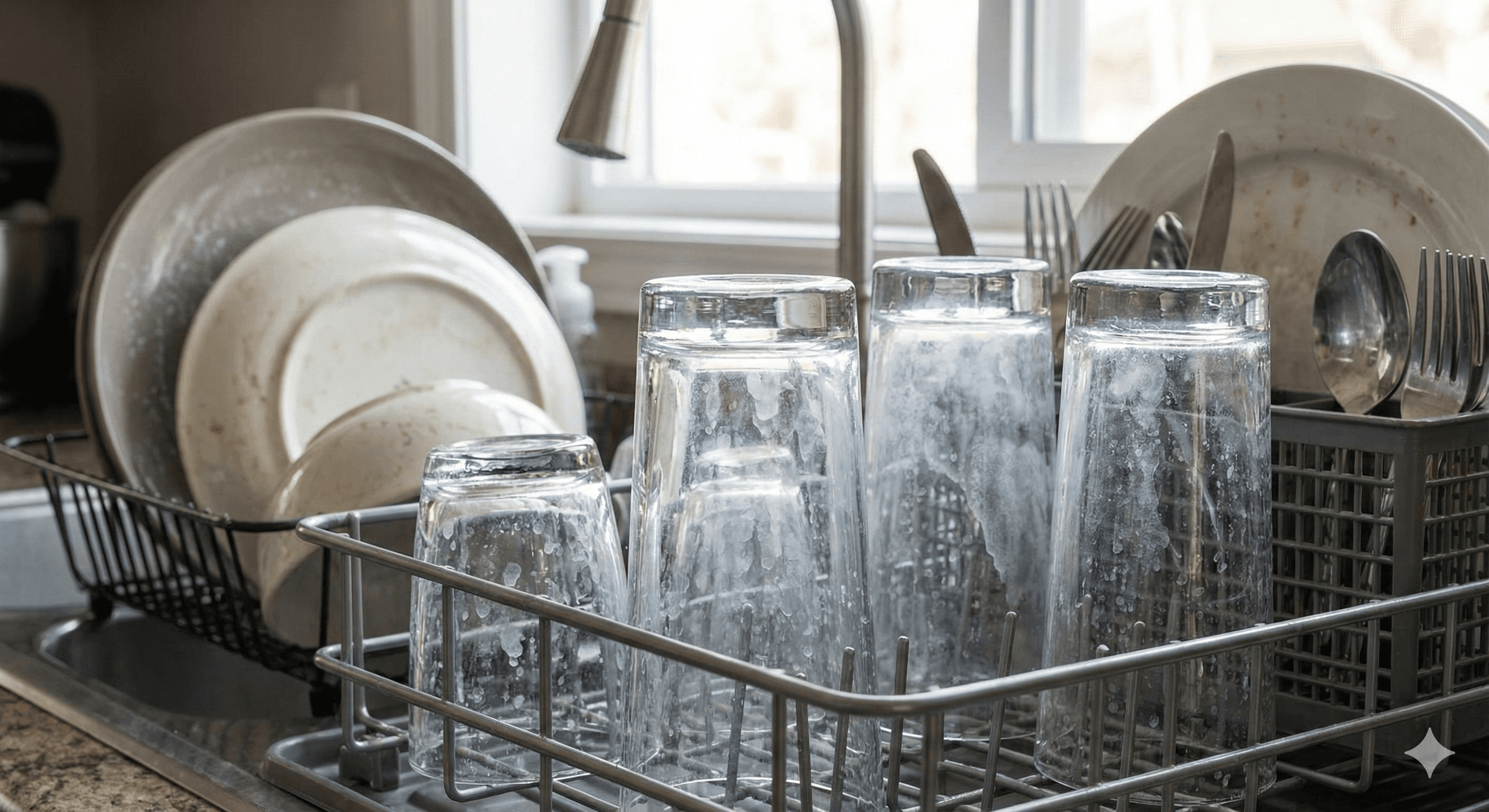
What causes dishes to dry with spots
Hard water contains calcium and magnesium that remain on surfaces after the water evaporates. Inside a dishwasher, those minerals can cling to plates, silverware, and glassware during the drying cycle.
The result is a powdery or cloudy finish that is especially noticeable on dark dishes and clear drinking glasses. Many homeowners assume it is a detergent problem when the real issue is the water itself.
How hard water affects dishwasher performance
Mineral-heavy water can make detergents less effective, which means soap has a harder time lifting grease and food residue. Over time, scale can also build up inside the dishwasher, affecting spray arms, heating elements, and overall efficiency.
When the machine is dealing with both cleaning and mineral buildup at the same time, results often become inconsistent. That is why spotted dishes and appliance wear frequently go hand in hand.
Why soft water improves dishwashing results
Softened water helps detergents work the way they are supposed to, so dishes rinse cleaner and dry with fewer visible spots. Glassware looks clearer, silverware comes out brighter, and the dishwasher itself deals with less scale accumulation.
That improvement can mean fewer rewashes, less product use, and better long-term performance from one of the most-used appliances in your kitchen.